
Capture the voice
Keep the argument direct, first person, practical, and willing to challenge the room without becoming a rant.
Thought-leadership publication
How an operator point of view on AI economics became a board-ready white paper, responsive web edition, and speaking platform.
The sequence problem
I did not want another paper telling leaders that AI is changing everything. I wanted to examine what happens after the announcement, after the license is approved, and after a headcount number enters the business case.
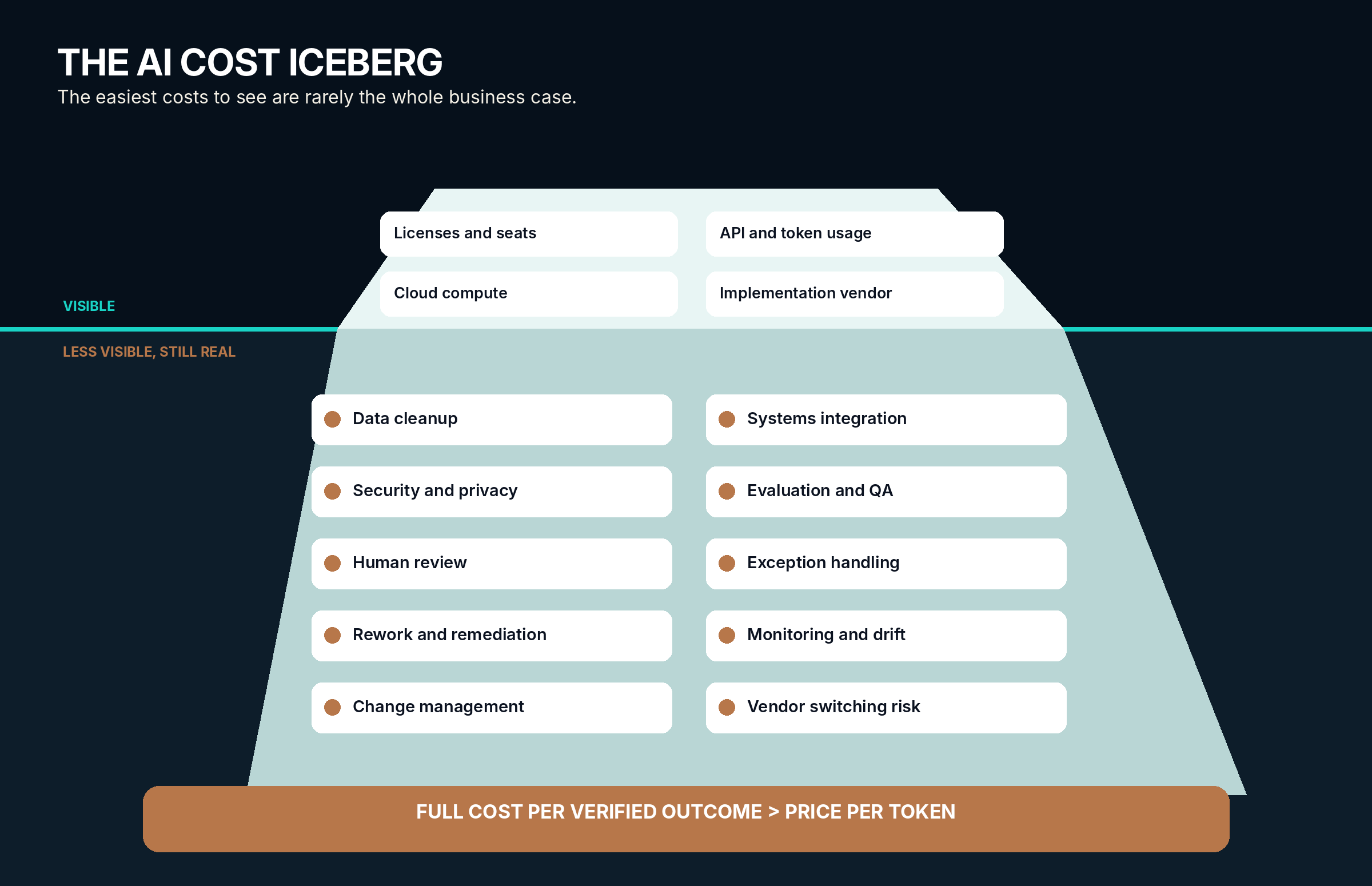
A company can move from experimentation to automation to workforce reduction before it has documented the work, mapped exceptions, identified the source of truth, or measured the full cost of an accepted outcome. That sequence makes visible activity look like operating value.
A company should not eliminate a specialist until the workflow has been documented, rebuilt, tested, and proven without depending on that specialist to correct it.
The operator point of view
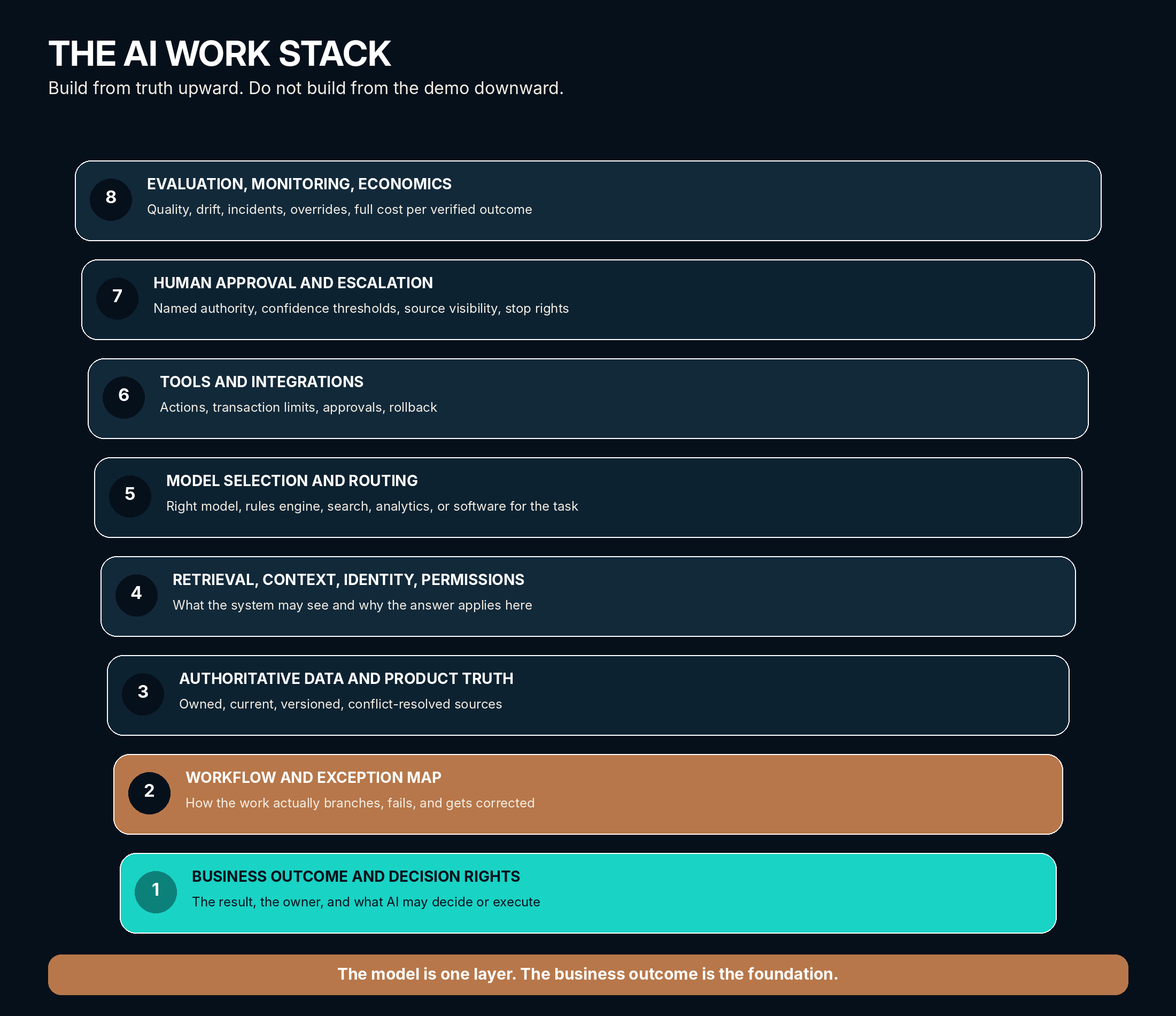
I am pro-AI. The argument is that useful AI needs an operating system around it: authoritative data, decision rights, human escalation, evaluation, and economics.
A model can draft an answer. A capability can produce the right answer, route the exception, record the decision, and survive review.
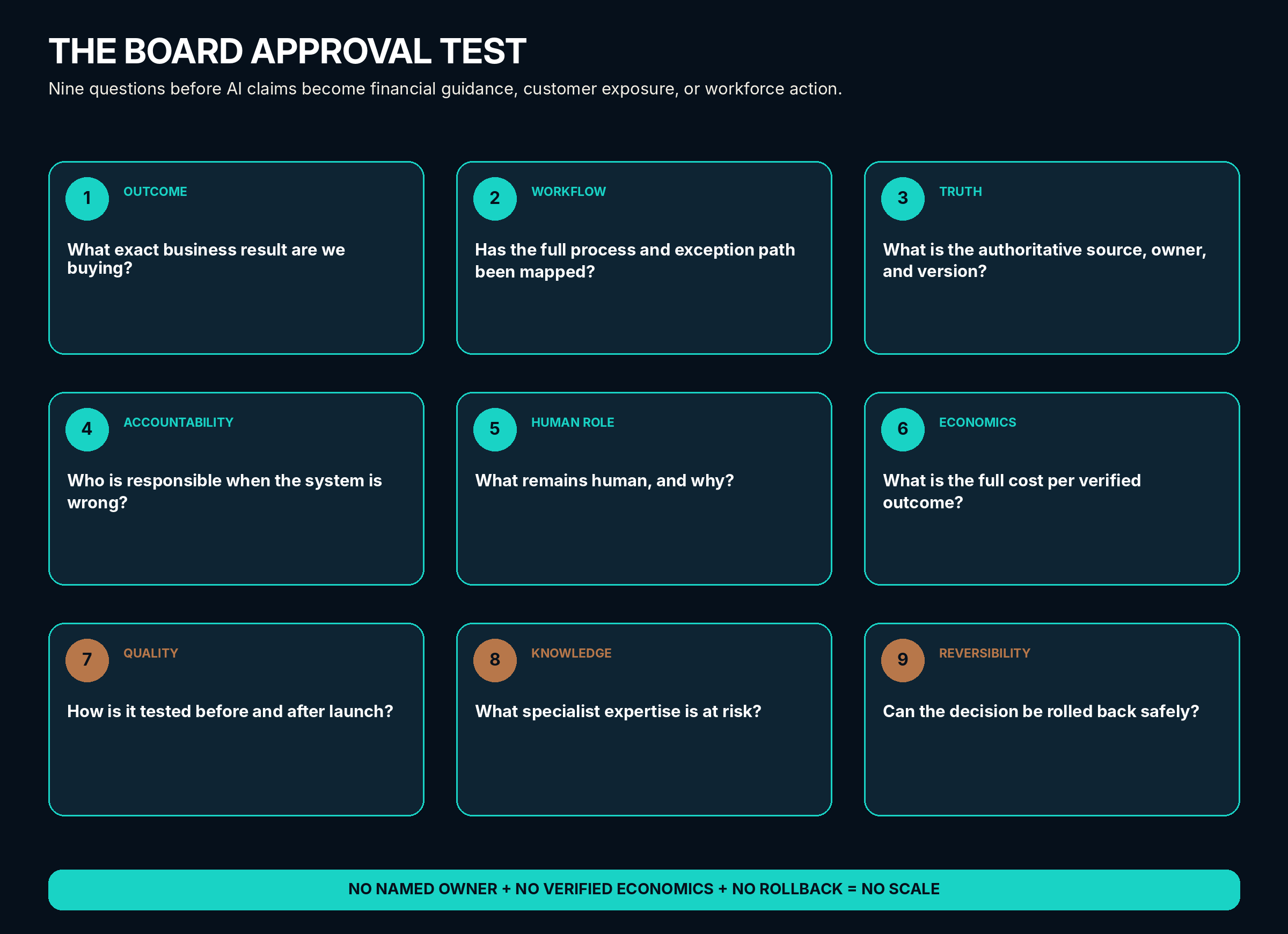
The work became a practical board framework for asking what outcome is being purchased, who owns it when it is wrong, what remains human, and when the operating model has earned the right to change.
That distinction also shaped the editorial choices. The paper does not ask leaders to protect every task exactly as it exists today. It asks them to understand the work before changing the role, preserve the expertise that keeps the system honest, and measure accepted outcomes instead of impressive activity.
Why ecommerce exposes the issue
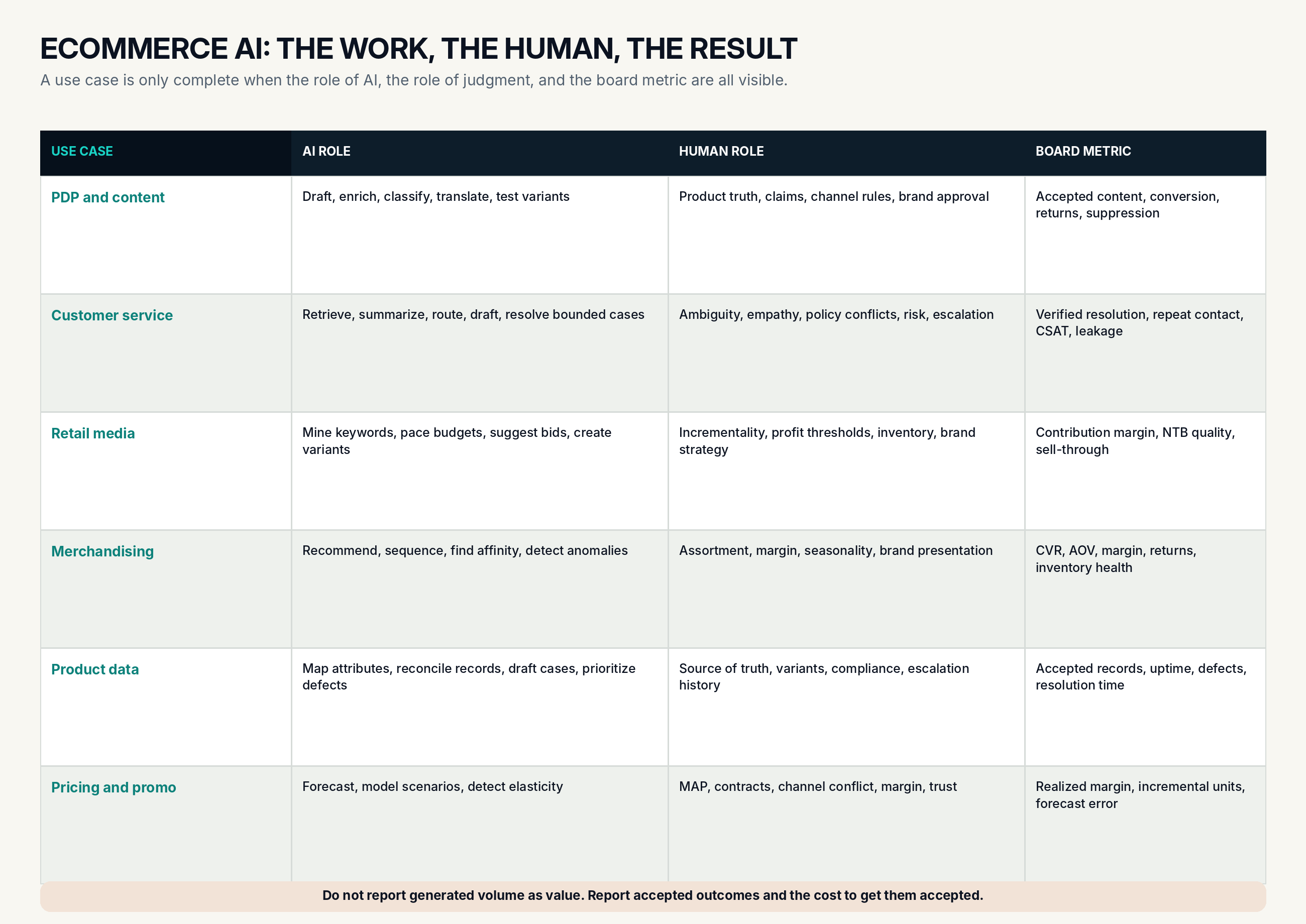
A marketplace listing is never only a writing task. It can carry marketplace rules, product data, legal or regulatory claims, packaging details, inventory constraints, merchandising intent, retail media consequences, customer-service history, and escalation logic.
The same is true of a service answer. A subscription, split shipment, promotion, marketplace seller, damaged item, or policy exception can turn a simple response into a judgment call. AI can help classify, retrieve, summarize, draft, compare, and route. The workflow still determines whether the answer is safe and useful.
How the work was built
Keep the argument direct, first person, practical, and willing to challenge the room without becoming a rant.
Use sources to test factual claims and set limits around what the publication can responsibly say.
Build Full Cost per Verified Outcome, the AI Work Stack, Crawl. Walk. Run. Earn., and the Board Approval Test.
Package the paper as a 24-page PDF, responsive web edition, visual system, and speaking platform.
What was produced
The supplied publication package contains the final 24-page PDF, a responsive web edition, eight original visuals, fourteen visible references, a board approval framework, and the case-study files needed to bring the work into the site.
The final publication keeps its factual boundaries visible. Gartner remains a forecast. Klarna savings remain company-reported. Moffatt v. Air Canada remains a British Columbia tribunal decision. The web edition also discloses the limitation around the Uber transcript review.
The frameworks are meant to travel. A board can use the approval test to challenge an AI business case. An ecommerce team can use the work stack to locate the missing source of truth or escalation path. A speaking audience can use Crawl. Walk. Run. Earn. to sequence experimentation, assistance, automation, and operating-model change.
Publication rigor
I can directly point to the 24-page final PDF, the supplied responsive web edition, eight visual assets, fourteen references visible in the publication, the Board Approval Test, and the case-study and publication files now connected to the site.
The publication green-light report records fifteen audited material claim groups and zero unresolved material claims. It also records PDF preflight, DOCX hygiene, responsive web, accessibility, and production QA results. Those are attributed to the green-light report, not presented here as independent inspection of the missing underlying audit records.
AI authorship disclosure
Artificial intelligence was used heavily in the research, source organization, editing, visualization, and beautification of this paper. The ideas, point of view, voice, judgments, original frameworks, and practical work presented here are Sudeep Arya’s. This paper was reviewed and published with his final authorization.
AI helped build the paper. It did not choose, own, or approve the position.
Bring it into the room
Running Before Crawling is designed to create a practical conversation about AI economics, specialist knowledge, workflow design, and accountability.